How to get cited in AI? A beginner's guide
The fastest way to get cited by AI is prompt-content alignment: finding the exact questions your customers ask, answering them directly, applying structural best practices, and refreshing often. Most brands see measurable results within four months.

The fastest way to get cited by AI is prompt-content alignment: finding the exact questions your customers ask, answering them directly, applying structural best practices, and refreshing often. Most brands see measurable results within four months.
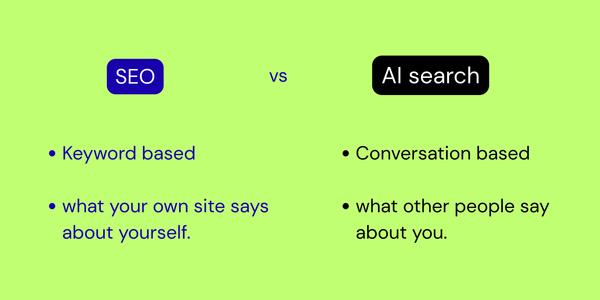
AI engines like ChatGPT, Gemini, Perplexity, and Claude don't rank pages they select answers. That means the old SEO playbook of targeting keywords and building backlinks only gets you partway there. What actually earns a citation is content that mirrors the way people ask questions in a conversational interface, and answers them clearly enough to quote.
Here's the four-step process, in order of impact.
1. Mine real customer language, not keyword tools
Your current customers already tell you how they phrase problems: in reviews, support tickets, sales calls, and Reddit threads. Mine these sources instead of guessing from search-volume tools.
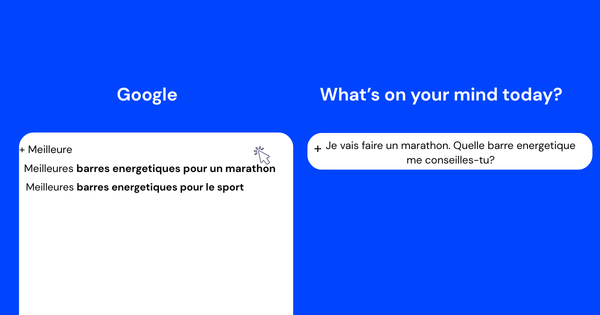
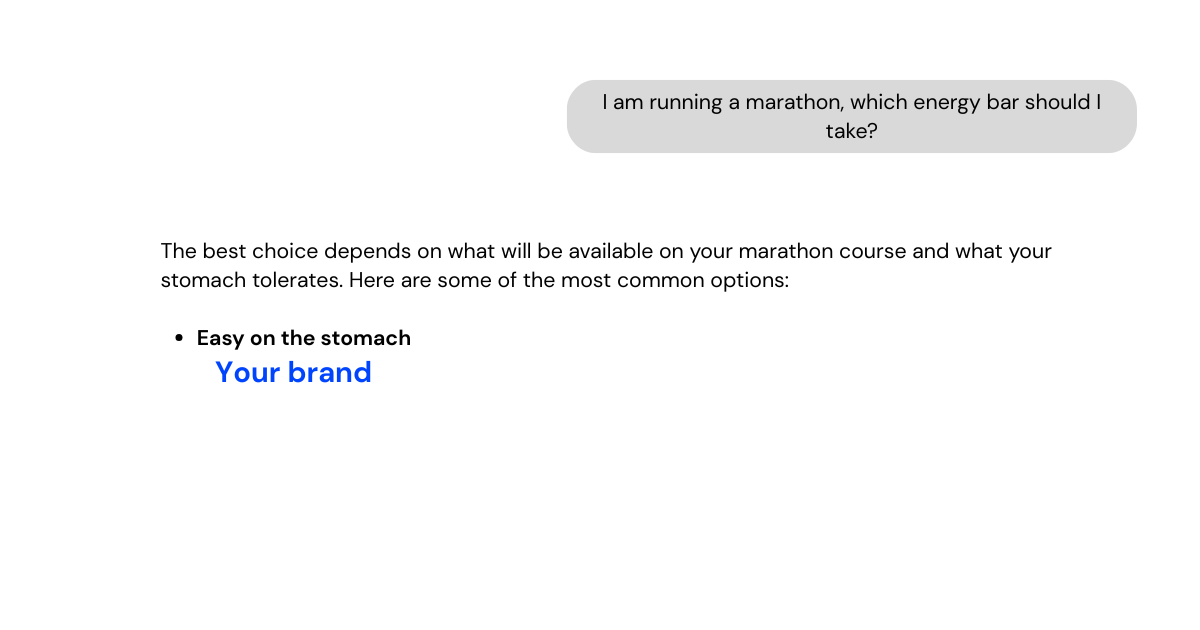
The shift is often dramatic: a keyword-era phrase like "best energy bar for a marathon" becomes a conversational prompt like "I'm running a marathon, how should I fuel?" That's not a small rewording — it changes sentence structure, intent, and the answer format that follows.
Build your prompt list from this raw language, then write content that answers those exact prompts. This is usually the hardest habit to break for teams coming from a traditional SEO background, because it means writing for a question, not a query.
2. Lead with the direct answer
ChatGPT and other engines favor content that answers immediately, so put the answer in your heading or opening line not three paragraphs in.
For the prompt "I'm running a marathon, how should I fuel?", the ideal opening is fact-driven and self-contained:
"The best fuel for a marathon is a 40/60 carb-to-fat ratio that avoids GI distress."
State the claim, then support it don't build up to it. If an AI engine has to read your whole page to extract the answer, a competitor's page that leads with it will get quoted instead.
3. Add structural best practices
Schema is effectively the API between your site and the AI. Article schema supports freshness signals, while FAQ Page schema exposes question-and-answer pairs in exactly the shape AI answers extract most readily. This is not the priority, the priority is answering with relevant content. But these will help the AI get all the answers it needs and crawl your pages effectively.
4. Refresh on a real cadence
AI engines weight recency heavily, and the threshold varies by platform:
| Engine | Approx. citation-age sweet spot |
|---|---|
| Claude | ~5 months median |
| ChatGPT | ~8 months median |
| Perplexity | Skews toward current-year content |
Source: Zyppy AI citation analysis, 2026
One caveat worth knowing: engines increasingly detect cosmetic freshness. Updating just the "last modified" date without changing substance gets discounted, since crawlers compare page snapshots across retrieval windows. A genuine refresh: a new statistic, a new example, a revised recommendation counts. A timestamp bump alone doesn't.
Build a refresh cadence around your highest-value prompts rather than refreshing everything on a fixed schedule. Prioritize pages tied to prompts you know convert.
FAQ
How long does prompt-content alignment take to show results? Most teams see measurable citation gains within four months of consistently publishing and refreshing prompt-aligned content.
How often should I refresh GEO content? Enough that each page has a substantive change not just a date update at least as often as your platform's citation window. For Claude, that's roughly every 5 months; for ChatGPT, closer to 8 months. Refreshing your highest-priority pages more often is better than refreshing everything on a fixed schedule.
Do I still need schema markup and FAQ sections if my content already answers the prompt well? Yes, but treat them as multipliers, not the primary lever. Strong prompt alignment is what gets you into consideration; schema, FAQ formatting, and fast load times increase the odds an engine selects and extracts your content cleanly.
Where do I find the actual prompts my customers are asking? Customer reviews, support tickets, sales call transcripts, and relevant Reddit threads are the most reliable sources they capture how people phrase problems in their own words, which is usually quite different from how they'd type a search query.
Sources
- Zyppy, AI Citation Age Analysis (2026)
- AuthorityTech, Content Freshness in 2026: Why Recency Signals Decide Who AI Search Engines Cite
- Brightter, Generative Engine Optimization (GEO): The 2026 Citation Framework